

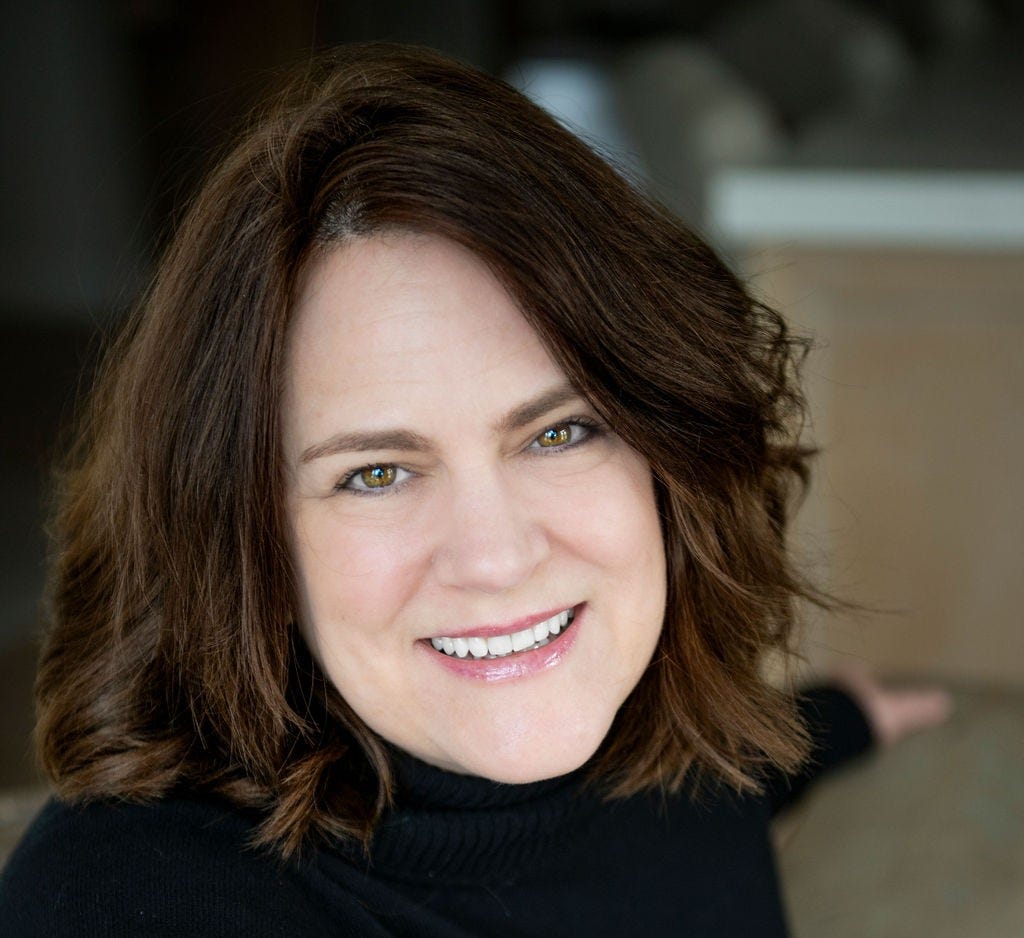
Greetings, I’m Cheryl: branding and communications consultant, writer, storyteller. I graduated from the Johns Hopkins University Master of Liberal Arts program in May 2023. This is the first of three in a series of articles on the value of a Liberal Arts education. I am grateful to the university and faculty for the opportunity to share my perspective.
I decided to frame my experience studying the Liberal Arts through three lenses: Story, Civic Friendship, and Virtue (those “ancient” attributes that actually serve quite well as modern tools). My hope is these topics may serve as natural bridges between classical ideals and current events, enticing students and professionals to learn more and consider a Liberal Arts degree at the graduate or undergraduate levels.
I entered the Hopkins MLA through the portal of a mature career in association and nonprofit marketing. At various points in my professional life, I’d considered an MBA, an MA in organizational leadership, and more recently, an MFA. Each pathway had its own merits for growth and advancement. I craved a different kind of educational experience—one that would alter the familiarity of my days, and the worn patterns of my thinking and vocabulary to bring forth a meaningful, new way of paying attention.
I craved a different kind of educational experience—one that would alter the familiarity of my days, and the worn patterns of my thinking and vocabulary to bring forth a meaningful, new way of paying attention.
I chose the Liberal Arts pathway because it centers universal questions about who we are and the nature of the world. These seemingly high-minded questions are really quite pragmatic. Our value as human beings is increasingly and narrowly framed by our consumption of products and services, while the speed and allure of media and technology is overpowering our ability to consider longer-term social and environmental impacts.
The Liberal Arts weaves knowledge—more importantly, questions about what constitutes knowledge—together with ancient and contemporary texts, diverse viewpoints, and critical thinking to develop a holistic understanding of the human condition. Contrary to what partisans from either side of the political spectrum may think or say, the Liberal Arts calls us to jettison ideologies for the discussion of ideas; to leave our carefully cultivated identities at the door; to interrogate binary thinking; and put some of our most pressing questions and challenges under a spectrum.
The opportunity to customize your own pathway of study is a compelling advantage of most Liberal Arts curricula. This does not mean learning within a comfortable, self-prescribed echo-chamber. No matter how you may arrive at your personalized portfolio of courses, astounding and previously unimaginable connections and contradictions will reveal themselves through study and dialogue.
I was drawn to courses that dealt with western philosophy and literature, political theory, the origins of capitalism, principles of leadership, and the specter of tyranny. I also studied Islamic art and architecture, medieval England, personal essay and memoir. To my surprise (and delight), the terrain between and among these subjects was continual and unbroken. I began to see how history and ideas from one culture or era roll into the next. Which brings me to the power of story.
Alexis de Tocqueville outlines his optimism and his doubts about American democracy. James Baldwin recounts a lynching from the perspective of a white child. Virginia Woolf moves between the narrative consciousness of multiple characters. Italo Calvino breaks the veil between the reader and the text. Hannah Arendt prophesies the toll of social atomization. Yaa Gyasi employs an oceanic motif to narrate centuries of enslavement and ancestral memory.
These are far more than stories. They are creative expressions of the human condition in all its deficiency, horror, hope, and potential. Comprehension requires us to disengage from Self (for a time) to float unflinchingly over a vast sea of prior experiences, ideas, and knowledge before inserting our own thoughts and opinions into the panorama. It’s an exhilarating exercise, a kind of meta-analysis that is unique to the Liberal Arts pathway.
When I completed my capstone project—a digital portfolio that combines learning outcomes with personal reflection and imagery—I looked to geography to help explain what I’d learned and how my studies had changed me. As a communications professional, I needed a metaphor to help me process all the terrain I’d taken in. Who was there before? What did they experience? What shaped their story? What landmarks or distances did they travel? How do I understand their journey?
In the Liberal Arts, you must enjoy reading, writing, and above all, meaningful conversation—online or in-person—with individuals from everywhere in the world whose views and experiences are different from your own. There is a cultivated attentiveness and equanimity that arises from this that is direly needed in a culture that fervently insists upon greater speed and more and more screentime.
Moving so quickly—between mass shootings and climate disasters to the discovery of new solar systems and animal species—erodes our natural human impulses for mourning and memory, for wonder and awe; and most importantly, for critical analysis.
A Liberal Arts degree does more than prepare students to be innovative or adaptive. Today, these attributes are presumed. The secret sauce of the Liberal Arts is story—understanding it, breathing it, debating it, sharing it. When we’re able to find and eloquently articulate expansive human significance from the past, from present work and future aspirations, we bring the fullest version of ourselves to whatever we do, wherever we go.
The secret sauce of the Liberal Arts is story—understanding it, breathing it, debating it, sharing it. When we’re able to find and eloquently articulate expansive human significance from the past, from present work and future aspirations, we bring the fullest version of ourselves to whatever we do, wherever we go.
If you enjoyed this article, please comment or share it with someone who may be considering the Liberal Arts pathway. I hope you will keep an eye out for my next article on Civic Friendship.
You so eloquently bring to life what a liberal arts education encompasses in this article. Thank you! As a humanitarian at heart, it took me several years to find the perfect advanced level education program that, as you put it, "...centers universal questions about who we are and the nature of the world." I find myself having to often "defend" myself in rooms of peers who don't seem to see the value in this kind of education. So glad to have found my people!
Yes! Love your writing, Cheryl!